
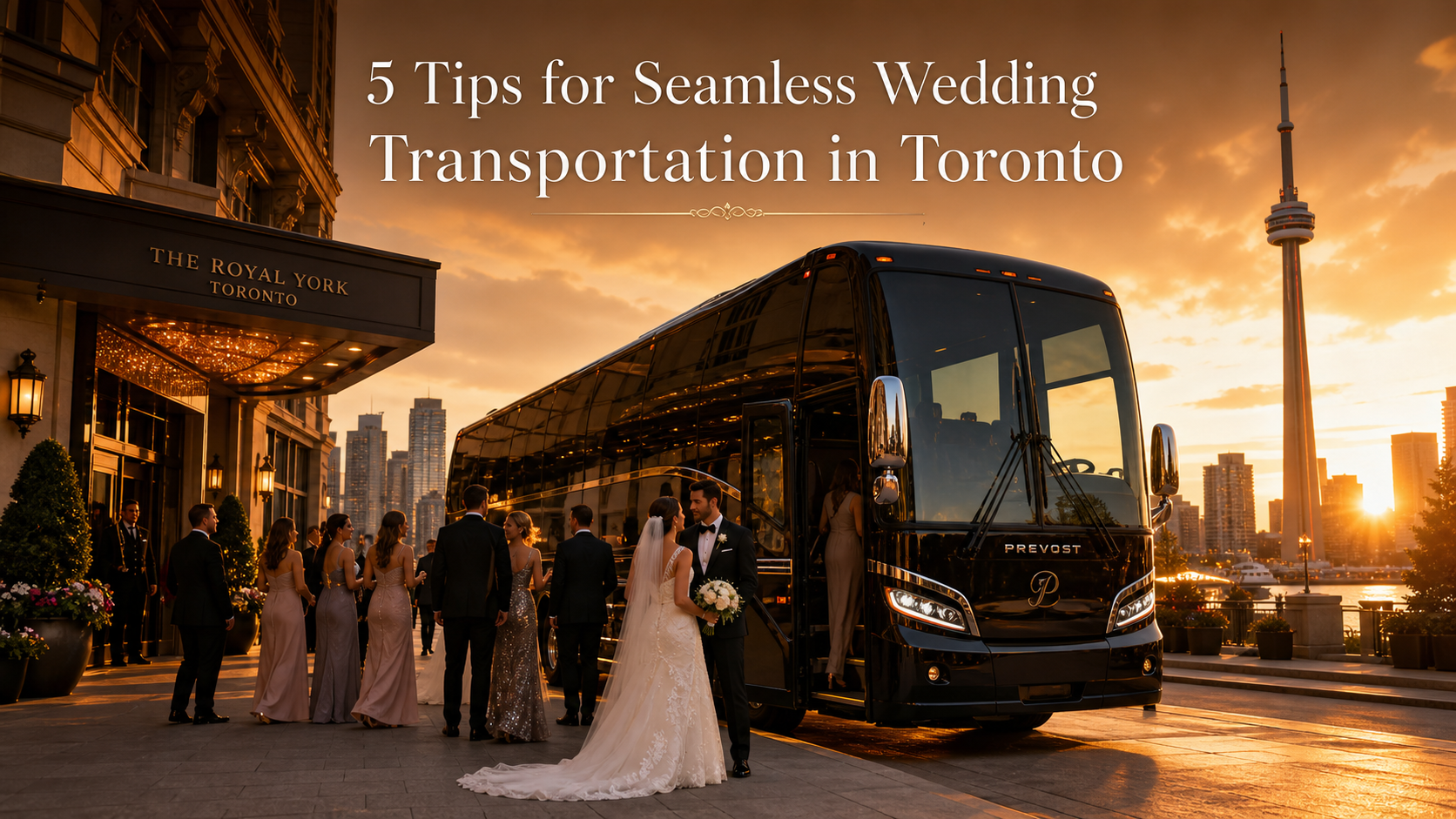
Coordinating wedding transportation in Toronto is key to a stress-free, enjoyable celebration. With the city's vibrant setting, busy streets, diverse venues, and high guest expectations, advance planning is essential. Secure group movement isn't just about logistics—it shapes the guest experience, keeps your day on schedule, and creates wonderful memories. This guide shares 5 strategic tips to streamline wedding transportation: align your timeline with realistic buffers for Toronto traffic, select the right vehicles for each guest group, map practical city routes, communicate essentials clearly to guests, and reconfirm all details in writing. Whether you're arranging shuttles for a small group or navigating dozens of arrivals across the GTA, these steps ensure your wedding day runs smoothly from start to finish.
Coordinating wedding transportation in Toronto is key to a stress-free, enjoyable celebration. The city's vibrant setting, busy streets, venue diversity, and guest expectations make planning essential. Secure group movement is not just about logistics; it shapes the guest experience, keeps the day on schedule, and contributes to wonderful memories.
Every wedding is unique, but a strategic approach to transportation streamlines the process: align your timelines, select the right vehicles for each group, chart practical city routes, communicate the essentials, and reconfirm everything in writing. Whether arranging shuttles for a handful of loved ones or navigating dozens of arrivals across the GTA, these steps help the day run smoothly from start to finish.
Professional bus rental partners in Toronto make it easier to match your wedding size, venues, and timing constraints with the right vehicles and drivers. So you spend less time troubleshooting and more time celebrating.
Tip 1 - Start with the wedding timeline
A well-defined timeline is the backbone of transportation planning. Start by outlining each event segment in detail, then anchor transportation to those moments and allow space for real-life delays. Toronto traffic, wedding attire, weather, and group boarding - all require practical time allowances.
Best practices for timeline-focused planning:
- Identify ceremony, reception, and photo-session times:
- List start and end times for preparation, photos, key ceremonies, cocktails, dinner, and after-parties.
- Share these with vendors and transportation partners to keep everyone in sync.
- Add buffers for traffic, boarding, and delays:
- Toronto's main arteries (Gardiner Expressway, DVP, 401, and central streets) can add 15–40 minutes, depending on the day, time, and downtown events. Plan accordingly.
- Allow extra loading time for formal attire, group photos, and guests with mobility aids.
- For groups with seniors, children, or special needs, extend boarding and unloading cushions by 10–20 minutes per stop.
- If relocating for photos, check whether vehicles should wait or return later.
- Anticipate weather slowdowns, especially in spring, late fall, and winter.
Sample timeline segment:
- 1:00 pm: Bridal party pickup at the hotel
- 1:30 pm: Family and VIPs scheduled (downtown location)
- 1:45 pm: All guests boarding the main shuttle
- 2:15 pm: Allow 20-minute buffer for traffic on Queen Street
- 2:35 pm: Arrival at ceremony venue
- 3:00 pm: Ceremony begins
Practical timelines offer clarity. Share with both the transport provider and the venue for alignment, and update as details shift closer to the event date.
Tip 2 - Choose the right vehicle mix
Toronto offers many options for wedding vehicles: luxury coaches, executive mini-buses, limousines, vintage cars, accessible vans, and more. The best mix ensures comfort, efficiency, and a consistent guest experience.
How to select vehicles for each role:
- Guest shuttles:
- Use coach buses or mini-buses for group transfers from hotels to venues.
- Assess how attire, gifts, and luggage affect space; oversized dresses and suit bags may reduce effective capacity.
- For multiple accommodation sites, consider separate vehicles or staggered runs.
- Bridal party vehicles:
- Choose speciality vehicles (decorated Sprinters, limousines, or premium buses) to deliver style and privacy.
- Confirm space for dress storage, bouquets, and clothing changes.
- Consider coordinated decor or signage for photos and event branding.
- VIP and family transport:
- Reserve comfortable, step-free vehicles for elderly guests or those requiring accessibility features.
- Ensure vehicles have ramps or lifts as needed, and offer extra waiting time to ease boarding.
- Vendor or staff transfers:
- If coordinators or photographers must move between locations, schedule separate transport to keep operations smooth.
Evaluate these aspects:
- Count seats carefully - don't fill vehicles, as guests in formalwear need extra room.
- Confirm accessibility if any guests use wheelchairs or walkers.
- Check if vehicles can accommodate strollers or child seats for family guests.
- Ask about vehicle amenities: restrooms, air conditioning, sound systems, and decoration policies.
Partnering with a specialist in charter coach service in Toronto provides clear guidance on the best-fit fleet for your needs, ensuring each group travels comfortably and arrives together.
Tip 3 - Map routes and pickup points carefully
Route planning takes on extra importance in Toronto, where event traffic, construction, and road closures are frequent. Map each segment, from multi-hotel pickups to cross-town venue transfers, and test or review travel times on the same days and hours as your event.
Checklist for route planning:
- List all pickup and drop-off points:
- Survey whether guests are at one hotel or multiple locations.
- For scattered hotels, arrange central pickup points or sequential stops with time buffers.
- Assess ceremony and reception venues:
- Request detailed maps showing loading zones, accessible entrances, and allowable waiting times.
- Ask if buses may idle or must leave after drop-off.
- Consider late-night logistics:
- Provide clear instructions for shuttles returning guests to accommodations.
- If running multiple trips, assign guests to specific departure times to avoid confusion and crowding.
- Downtown traffic and parking:
- Queen's Quay, Lakeshore Boulevard, and King Street experience periodic gridlock, especially during sports events or festivals.
- Confirm with event venues about any current roadworks or restricted parking on surrounding blocks.
- Test travel times:
- If possible, drive or review routes at the actual event time.
- Use online maps with historical traffic data to set best and worst-case travel durations.
Route planning summary:
- [ ] Identify all guest and party pickup points
- [ ] Obtain detailed venue parking and loading guides
- [ ] Record venue and driver contact numbers
- [ ] Calculate expected and maximum travel times
- [ ] Note any known city events impacting routes
- [ ] Ask your provider about driver familiarity with chosen routes
- [ ] Organise shuttle loops as needed for larger groups
Transportation partners familiar with Toronto's layout help avoid delays. For custom mapping, ask your charter provider to confirm timing and alternate routes well before the big day.
Tip 4 - Communicate transportation details early and clearly
Clear and early communication is the simplest way to prevent day-of confusion. Guests, drivers, and planners all need the right information at the right time to keep the wedding running smoothly.
Make sure to:
- Share schedules widely:
- Include all pickup details on save-the-dates, wedding websites, emails, and RSVP materials.
- Specify departure times ("Shuttle departs promptly at 2:15 pm" instead of "Boarding at 2 pm").
- Use maps or directions whenever locations are complex or unfamiliar.
- Send reminders the week of your event and the day before via email or text.
- Designate a transportation coordinator:
- Assign a responsible person (planner, friend, or relative) to answer questions and handle on-the-day changes.
- Share this contact's phone number with all guests and drivers in advance.
- As an extra precaution, provide an alternate emergency contact - especially if group movements are large or routes are complex.
- Set up efficient channels:
- Leverage group messaging, wedding apps, or a simple call system in case last-minute changes occur.
- For guests with special needs, connect them directly with the coordinator in advance.
Example communication touchpoints:
- Wedding website:
"Coaches depart the Main Street Marriott Hotel at 1:45 pm; final boarding at 2:00 pm. Shuttle coordinator (416-xxx-xxxx) will be on site." - Welcome bag insert:
"Blue shuttle picks up at South Entrance, return coaches depart venue at 10:30 pm and 12:15 am."
If guests are travelling from out of town, coordinate airport transfers in Toronto and provide flight-specific details to ensure a comfortable welcome for everyone.
Tip 5 - Confirm all details in writing and plan for contingencies
Reliability hinges on clear, written agreements. Well before your wedding, document every detail and clarify expectations with both your provider and key participants. This minimises risk and sets the stage for adaptability if anything changes on the day.
What to confirm in advance:
- Full itinerary: all dates, addresses, pickup/drop times, and any mid-route stops.
- Vehicle types, seating, and amenities: get this in writing with specific models and features.
- Accessibility accommodations: confirm availability and policies for ramps, lifts, special seating, or child seats.
- Driver and coordinator contacts: ensure direct numbers are exchanged on all sides.
- Wait time and overtime policies: clarify what happens if events run long or guests are delayed.
- Backup contacts for operational support if your main point person is unreachable.
- Service rules: any restrictions on decorations, food, drink, or music.
Best practice calls for a final check-in with your transport provider 24–48 hours before the event. Conduct a last-minute run-through to catch any overlooked detail.
Contingency preparations:
- Monitor the forecast daily during the week before your event; Toronto weather can be variable and significantly affect travel times.
- Ask if providers have backup vehicles or drivers scheduled for emergencies.
- Prepare a flexible guest list for shuttles in case of last-minute additions or changes.
- Develop a communication plan if traffic or breakdowns delay service; additional notification procedures can help keep guests calm and informed.
Wedding planners with experience in wedding transportation in Toronto often help tailor these strategies to fit your timeline, venues, and unique guest needs.
Wedding transportation planning checklist
A structured checklist supports seamless coordination and keeps planning tasks on track.
StepRecommended TaskNoteSet event timing and travel buffers | Document schedule in detail, add 10–20 mins per trip | Factor in busy Toronto times, weather, or loading delays
Identify vehicle needs by guest group | Assign specific types (coach, mini-bus, car) | Ensure VIP and accessible needs are met
Map routes and check real-world times | List all transfer routes, review potential traffic | Confirm venue loading areas and access instructions
Share info early via all channels | Distribute through website, invites, email, in-person | Assign and share coordinator contact for all guests
Confirm contract and backup plans | Get written arrangement, clarify changes/overtime | Prepare for weather, late guests, and alternate vehicles
Referring to this checklist as you coordinate with rental bus services in Toronto helps you stay organised and ensures that both routine and special requirements are captured.
Frequently Asked Questions about Wedding Transportation in Toronto
When should I book wedding transportation in Toronto?
Book as soon as your date and venues are locked in - ideally 6–12 months in advance for popular GTA weekends. This ensures vehicle choice and flexibility with pickup times, especially for large events or during high season.
How many vehicles will I need?
Calculate based on the total number of guests, where they're staying, and the event structure. Typically, one full-size coach seats 50–56 guests comfortably, but minibuses or shuttles offer greater flexibility for multiple stops or smaller groups. Discuss with your provider to identify the best mix.
What details should guests provide for pickup?
Request full guest names, pickup location (hotel/address), and contact number. If any guest needs mobility assistance, luggage space, or has special requirements, collect these details early and confirm arrangements with your provider.
Should transportation cover both the ceremony and the reception?
If events are at separate venues, provide group transport for both transfers. For a single venue, shuttles may only be needed before and after the event for guest arrivals and late-night returns.
How much buffer time is needed for Toronto traffic?
Add 15–30 minutes per major journey, especially for routes through or around downtown or during peak hours (Friday afternoons, evenings, and weekends). Flexibility is crucial as many Toronto streets experience unpredictable slowdowns.
Who coordinates transportation on the wedding day?
Assign a transportation lead who is not part of the main wedding party. This individual should have the authority to adjust schedules, communicate with guests and drivers, and make real-time decisions as needed.
How to handle guests staying at multiple hotels?
Cluster hotels geographically and arrange separate or staged pickups. Clearly communicate to each group which vehicle and time slot they are assigned. Mobile updates just before pickup are helpful if possible.
What should the transportation contract include?
Include event dates, all scheduled times and stops, specific vehicle models and amenities, policies for delays or overtime, payment terms, and full contact information for drivers and coordinators. Confirm cancellation or adjustment procedures in writing to avoid misunderstandings.
Toronto weddings with significant guest lists often benefit from group transportation services in Canada that anticipate large-scale coordination. Experienced charter operators streamline these logistics and adapt quickly to changes.
Careful preparation is the foundation of reliable and enjoyable wedding transportation. When you align event timing, choose vehicles thoughtfully, detail every route, communicate openly, and confirm all agreements, you create an atmosphere where both guests and organisers can focus on celebrating. Local expertise, like that found with partnering charter coach service Toronto, turns planning into peace of mind - making the logistics of your Toronto wedding as joyful as the rest of your day.